
Laredo Resident Lookup Record Paths
No official master list identifies every person in Laredo. A useful resident lookup instead matches the question to a record that documents a particular relationship and date. Registration information, a tax account, a deed, a court filing, a license, and a historic directory do not mean the same thing. The table separates what each record can support from what it cannot prove.
| Record trail | What it can confirm | Local keeper | Access route |
|---|---|---|---|
| Registration information | Status and available registration details at the relevant time | VoteTexas or Webb Elections | Name, county, date of birth, and ZIP are stated lookup inputs; protected fields can be suppressed |
| Tax or parcel account | Ownership or appraisal context | Webb County Tax Assessor-Collector and WCAD | Account, billing number, owner name, or situs address |
| Recorded instrument | A dated conveyance or filing relationship | Webb County Clerk | Official index, clerk request, or certified-copy request |
| Court case | A filing, calendar entry, or court event | Webb clerk, court, or Texas judiciary | Portal search followed by the proper clerk for copies |
| Vital or historical material | An event or household clue for a defined period | City, county, DSHS, library, or archives | Eligibility rules, public-age thresholds, or repository procedures apply |
| License or entity filing | Public credential or business role | Texas licensing board or Secretary of State | Check the official status and filing date |
Begin with the source closest to the question. A person connected to a parcel should be checked through the tax account and, if needed, the County Clerk. A probate question belongs with the court file. For a family-history lead, use the directory year and repository together, then avoid turning that dated entry into a current-address claim.
Note: A matching name is only a lead until another identifier and the record date point to the same person.
Laredo Court Searches Need the Right Door
Webb County divides court records by court level and case type. The public-access landing page offers Criminal Records, Probate Case Records, Family Case Records, Civil Case Records, and Court Calendar. District civil, family, and criminal records are held by the District Clerk. County-court matters belong with the County Clerk, and Justice of the Peace matters should go to the applicable precinct. Laredo Municipal Court handles its own municipal citations and Class C matters.
The Webb County public-access court search is a useful starting screen for a Laredo resident lookup when the court category is known.
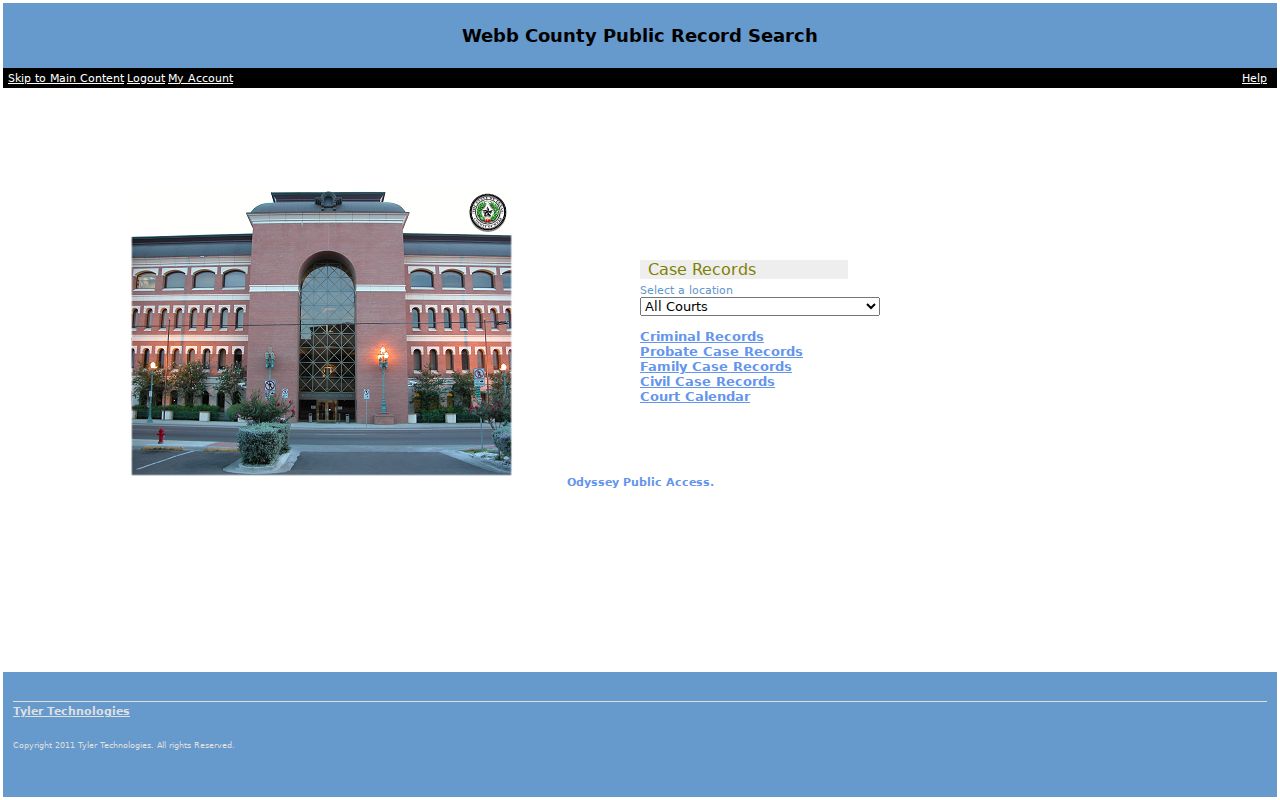
The captured portal view shows the category choice, not a promise that every document or historic case is visible online. A case number, party name, filing date, and court type make a clerk request more precise.
Statewide tools serve a different role. TAMES is chiefly an appellate search with fields for court, case number, style, attorney or bar number, date range, and trial-court references. Its data refreshes nightly and it does not hold trial-court records. Texas re:SearchTX supports case, filing, document-text, and hearing research after sign-in or registration, but local integration and fees vary.
The re:SearchTX research service is shown here because it is a statewide supplement, not a substitute for a Webb clerk file.
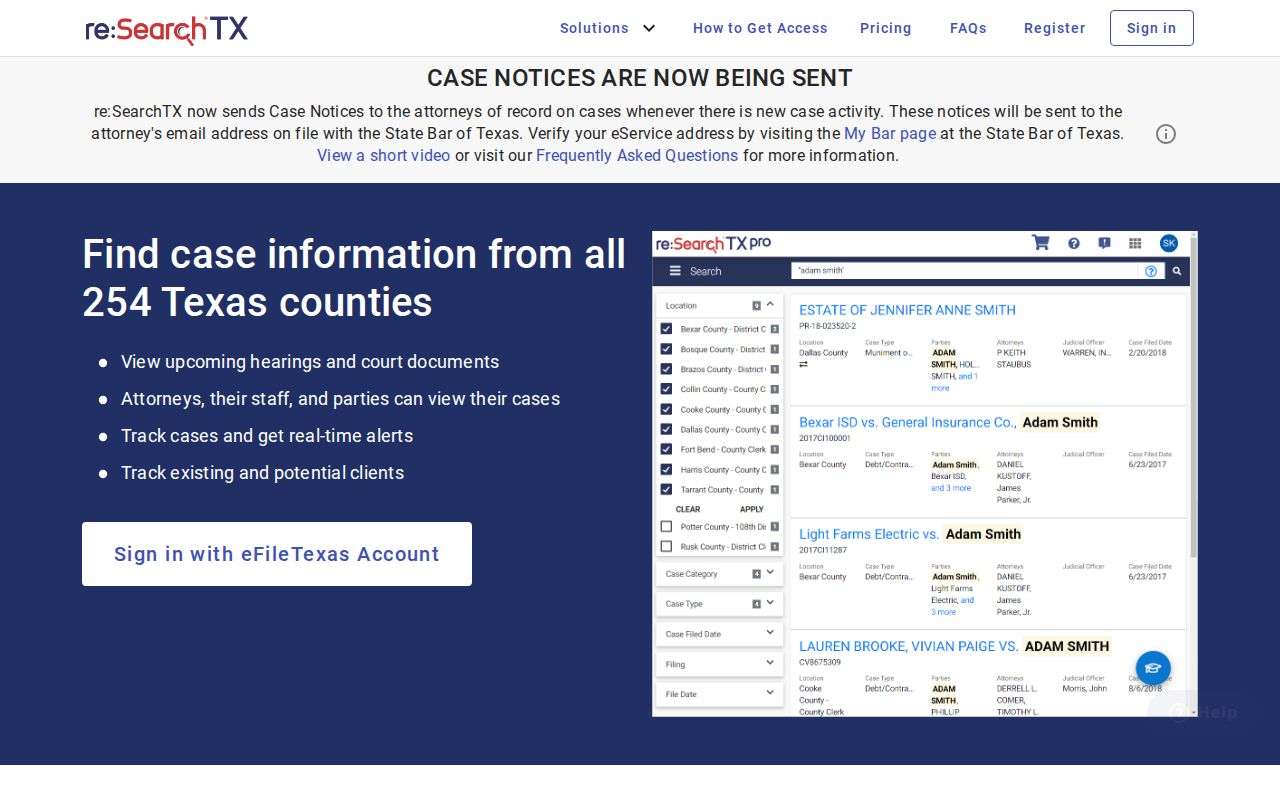
Use the court-level choice as a decision point. A name can appear as a party, attorney, witness, or another role, so a docket result does not establish a Laredo address or resolve an identity by itself.
Verify a Laredo Resident Lookup
Good verification uses two identifiers and a date. Start with the spelling as it appears on a document, then compare it with a second identifier that belongs to the same record system. In Laredo, useful second details include a parcel ID, an instrument number, a case number, a license number, a historical address, or a voter unique identifier when it is lawfully available. Initials, accented names, Spanish naming conventions, duplicate names, and household boarders can all produce false matches.
- Write down the full name, a known date, and one traceable identifier. Keep the record type clear: a tax account is not a voter record and a case title is not a residence finding.
- Search the Webb tax portal by owner name or situs address when the question concerns a parcel. The official instructions also permit account and billing-number searches.
- Check the relevant court layer using the name variant, court type, and date range. If the online result is incomplete, request the specific case or document from the clerk rather than asking for a compiled personal file.
- For a historical name, compare the publication year and address in a city directory with the next dated source. The Laredo city directories are the right shelf for that earlier household trail.
A court result is normally an index entry or docket reference before it is a document. Check the caption, court, filing date, and case number. That discipline avoids blending two people with the same surname into a single Laredo resident lookup.
- Docket
- A court's running record of case events, filings, settings, and orders. It is not a biography of a person named in the case.
- Index and image
- An index points to a record by searchable details. An image is the scanned record itself, which may be unavailable online or restricted by the custodian.
- Certified copy
- A copy issued and certified by the custodian for official use. It is different from a portal screen or an ordinary electronic copy.
Laredo Vital Records Need a Boundary Check
Vital-record custody depends on where the event occurred, not simply on a Laredo mailing address. Birth records inside Laredo city limits go to City of Laredo Vital Statistics. Webb County Clerk maintains death records for events in Webb County outside the incorporated city. Before choosing a registrar, check the address against current boundaries and then confirm the office's current form, fee, identification, and eligibility requirements.
The Webb County Vital Records page identifies the local city-limit and outside-city-limit split.
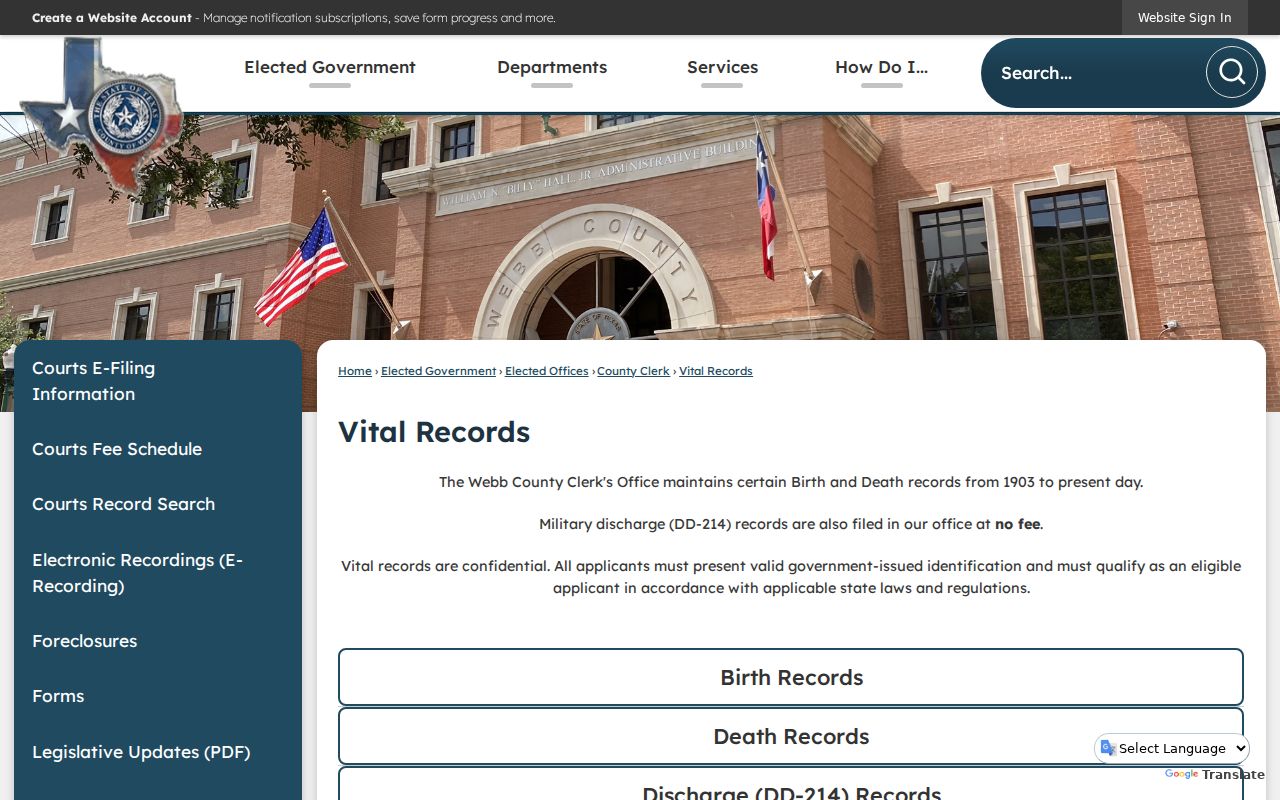
That split prevents a common dead end: a request sent to the wrong registrar can delay a lawful search even when the event took place in Webb County.
Texas DSHS birth records provide statewide products and ordering routes. DSHS says birth records run from 1903 to the present, but records under 75 years are limited to qualifying people or those with documented direct tangible interest. Recent death records also have access limits. A verification letter confirms limited facts and is not the same as a certified certificate.
The DSHS birth-record service is the statewide fallback shown below.
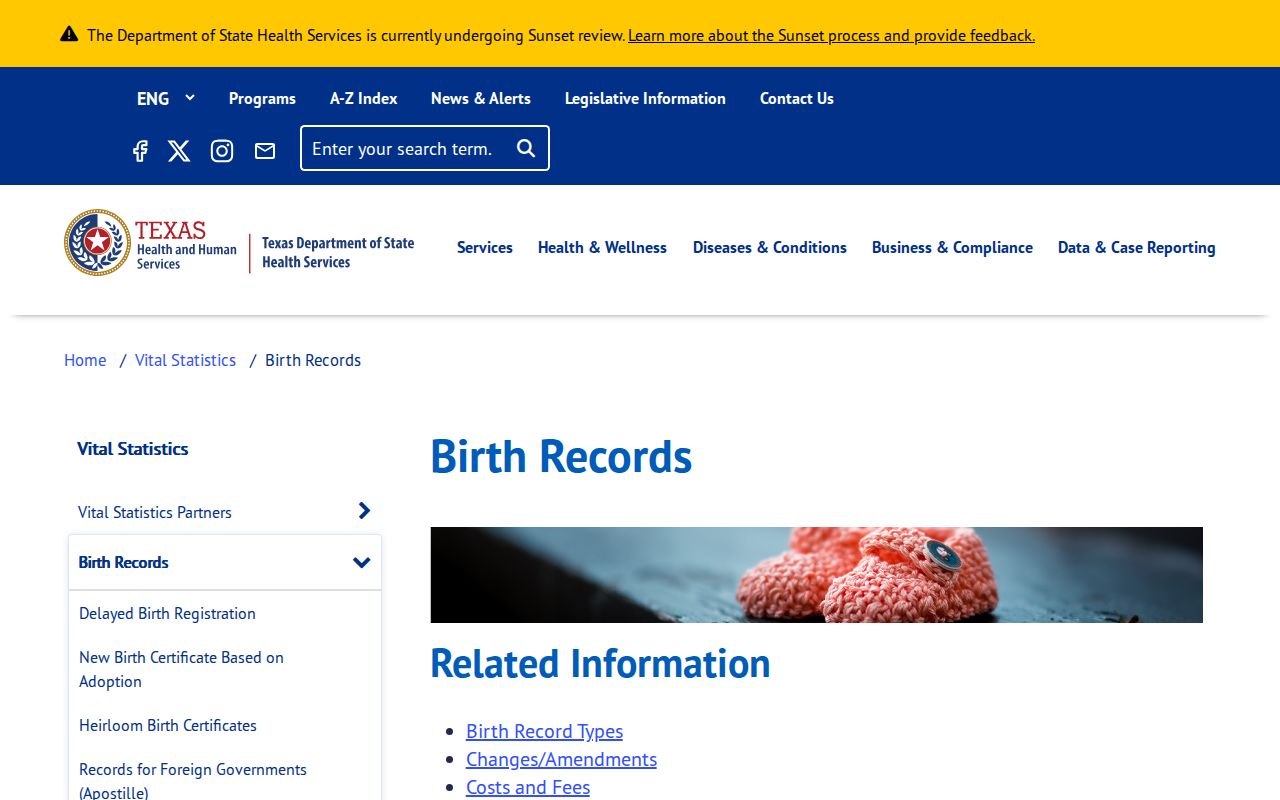
Use the public-age threshold and the stated eligibility rules as the starting point. A records request does not remove those limits or authorize publication of a recent person's birth details.
Laredo Resident Roles Are Not the Same
A resident lookup has to name the relationship a record actually captures. Webb tax records can show an owner and a mailing address, while the person living at the situs may be different. A recorded deed identifies grantor and grantee at the date of a transaction. A voter result speaks to registration information, subject to confidentiality. A court index identifies a role in litigation. A license or entity filing may identify a public business role or contact.
Texas licensing records add another focused layer. The Texas Department of Licensing and Regulation can search public license information by name, license type, city, or county. SOSDirect is the state route for entity filings and may show filed roles and addresses. Neither source should be repackaged as a home-address directory.
| Record role | Careful reading |
|---|---|
| Owner | Connected to a property account or recorded instrument, not automatically the current occupant. |
| Registrant | Connected to voter registration at the relevant time, subject to available and protected fields. |
| Party | Named in a court matter, without a conclusion about residence or the case outcome. |
| Licensee or filer | Connected to a public credential or entity filing, which may use a business contact. |
Note: Record roles and mailing details should be preserved with their dates, rather than combined into a present-tense personal profile.
Laredo Resident Lookup Privacy Limits
Texas public access has important limits. The Texas Attorney General explains that governmental information is generally public under the Texas Public Information Act, subject to exceptions and redactions. Voter records can include confidential or alternate-address protections for eligible participants. The Secretary of State's current confidentiality materials identify protected categories and require a request with the county voter registrar. Do not treat a missing field as a portal error or try to work around a protected address.
Recent vital records, sealed or expunged court material, juvenile information, protected medical information, and sensitive identifiers have separate rules. Webb County Clerk's redaction notice also describes requests by eligible people to redact certain Social Security, driver-license, and residential-address information from property records under recent legislative changes. The custodian controls the exact form and eligibility.
Lawful use. Use a Laredo resident lookup for a personal, lawful purpose and keep sensitive details out of public notes. Never use records to stalk, harass, intimidate, or harm another person.
Commercial people-search services are not used here because they can merge stale addresses, relatives, aliases, and probable matches without a clear custodian. Official sources can also contain errors, which is why the underlying office and record date matter.
Laredo Resident Lookup and Voter Records
Webb County Elections Administration is the county voter registrar and election administrator. Its office is at 1110 Washington Street, Suite 103, and its stated coverage includes 69 precincts, three school districts, six cities, and Laredo College. VoteTexas guidance says registration information can be located by name, county, date of birth, and ZIP, subject to the fields the state returns and any confidentiality restriction. The live public route was access-blocked during research, so its current field order and display should be confirmed before relying on it.
A registration result is date-specific. It can support registration information or jurisdiction at that time, not uninterrupted residence or a ballot-choice conclusion. Potential voter fields have separate rules for mailing address, precinct, voting districts, registration date, and voter unique identifier. The authenticated Texas.gov update manager uses a separate sign-in process and is not a public resident lookup. For a list or data request, Webb Elections should confirm the current Form 21-56 or Form 24-1 procedure, fee, affidavit, delivery format, and protected-field limits.
Laredo Requests Need the Custodian
When an online result is not enough, ask for an existing record from the office that holds it. The Webb District Clerk copy-request page asks for the case number when known, or party names, case type, document name, approximate filing date, and delivery preference. It states that email is fastest for non-certified copies, while mail and will-call are also available. Judicial records should go to the clerk, not the county public-information office.
For county administrative records, the Webb County Public Information Office routes written public-information requests. City records use the City of Laredo's written Open Records Center process. Keep the request narrow: name the agency, record class, date range, and any known identifier. The law does not require an agency to create a new dossier when it does not maintain one.
Once a ZIP narrows the geography, the Laredo by-street directory is the better route for a parcel and boundary check. It keeps a one-person search from turning into a broad search of a whole street.