
Start a Laredo Residents Directory Search
Laredo has no one official roll that proves who lives at every address. A property account can identify an owner, an election record can describe registration status, a deed can identify parties to a transfer, and an old directory can place a household at an address in one publication year. Each answers a smaller question. Start with the record keyed to the name or address you have, then use another dated source to check a possible match.
The practical order changes with the task. Webb County tax records are useful when the address is known. Court portals are organized by case category, not present residence. The library and archives are better for a past household. A city or county request should name an existing record, the office holding it, a date range, and an address, number, or other identifier when one is available.
- Search the Webb County tax portal by address or owner name and save the account number and date.
- Check WCAD parcel layers for the street, subdivision, city-limit, or district setting.
- Use the County Clerk route for a recorded transaction and verify the instrument with the custodian.
- For a former household, identify the directory year before going to the library, state catalog, or archive.
- Send a narrow written request when the needed record is not searchable online.
Note: A matching name alone is not enough; keep the record date and one independent identifier before drawing a conclusion.
Laredo Resident Records Offices
Three Webb County offices form the core local route. The County Clerk keeps deeds, liens, marriage records, county-court material, and official proceedings. The Tax Assessor-Collector supplies account and situs-search paths. Elections Administration manages local registration work. City departments keep municipal records, while court records stay with the relevant clerk. Contact the office that created or holds a record instead of asking a general office to assemble a file about a person.
Webb Tax Assessor-Collector
1110 Victoria Street, Suite 107
Laredo, TX 78040
956-523-4200
Webb Elections Administration
1110 Washington Street, Suite 103
Laredo, TX
956-523-4050
The Webb County Public Information Office routes county-department requests. A docket, filing, judgment, or certified court copy should go to the District Clerk, County Clerk, Justice of the Peace, or other court custodian that holds it.
Laredo Tax Records by Address
The Webb County tax portal is the most direct current address tool in the Laredo residents directory. Official instructions describe searches by account number, billing number, owner name, and situs address. A situs address is the physical property location carried by a tax account. The result identifies an account number and owner name, and the account link opens more property detail. A mailing address can help recover a hard search, but it is not proof that the owner occupies the parcel.
| Portal field | How it works | Use with care |
|---|---|---|
| Account number | Finds the tax account directly | Keep it with the retrieval date |
| Billing number | Uses the bill identifier | It is not a parcel boundary |
| Owner name | Last name, then first name | Common names need another identifier |
| Situs address | Street or PO number plus street name | Use the current address form |
The daily-updated WCAD ArcGIS service adds parcel, road, subdivision, cadastral-line, abstract, district, city-boundary, and county-boundary layers. It is a map reference, not a final ownership record. Its live identify-popup fields were not captured in the research, so verify a parcel detail with the tax office or a recorded instrument.
- Parcel
- A mapped unit of land used for appraisal and tax administration.
- Situs address
- The physical property address on a tax account.
- Legal description
- A lot, block, tract, abstract, or other land description.
- Instrument
- A recorded document such as a deed, lien, release, or plat.
Laredo Geography Changes Record Custody
A Laredo mailing address can be inside the incorporated city, in the five-mile extraterritorial jurisdiction, or elsewhere in Webb County. That can change the office that handles a permit, a city service record, or a vital-record request. The County GIS map collection includes corporate limits, ETJ, roads, political boundaries, and unincorporated-subdivision sheets. Its maps are general-reference products, so note the map date and independently confirm a boundary when it controls the request route.
| Geographic layer | What it helps answer |
|---|---|
| USPS ZIP | How to standardize a delivery address |
| City limit | Whether a City department may be the custodian |
| Five-mile ETJ | Whether an address is in a planning area, not necessarily inside the city |
| County subdivision | Broad setting for unincorporated land |
For an address format or ZIP, use the USPS ZIP Lookup. USPS says its response does not confirm that a person or company is at an address. For municipal and parcel geography, use Webb GIS. Those systems answer different questions and cannot replace one another.
Laredo Current Resident Directories
Current Laredo resident directories are several dated public indexes. The property source is strongest for a tax account or owner context. Registration sources address voter status under Texas rules. Recorded instruments identify parties to a transaction. Court and municipal records identify a case-related role, not residence. Treat each as evidence of the event it records rather than combining them into a single profile.
| Record source | What it can show | Keeper | Access route |
|---|---|---|---|
| Tax account | Owner, account, situs, tax context | Webb Tax Assessor-Collector | Online search and office |
| Voter registration | Registration information returned by the state system | Webb Elections / Texas SOS | Lookup or current request form |
| Recorded instrument | Parties, date, instrument, legal description | Webb County Clerk | Official portal or clerk request |
| City permit or CO | Address-linked project or program context | Building Development Services | Department process |
| Directory volume | Household or business listing in one year | Library or archive | Reading room, scan, or request |
A Texas voter result can involve confidential fields and does not establish continuous occupancy or party membership. The VoteTexas registration route and the county registrar are the proper places to check current rules. A name-first search that needs confirmation across record types belongs in the more focused Laredo resident lookup workflow.
Laredo Court Records by Level
Court work should begin with the court level, not a broad name search. The Webb public-access landing page separates Criminal Records, Probate Case Records, Family Case Records, Civil Case Records, and Court Calendar. It does not establish that all filings or images are online. The District Clerk holds district civil, family, and criminal material; the County Clerk holds county-court categories; Justice of the Peace offices keep their own cases; and Municipal Court is a separate City of Laredo path.
When the portal is incomplete, a District Clerk request should include the case number if known, or party names, case type, document sought, approximate filing date, preferred delivery, and contact details. The published route says non-certified email requests are generally fastest, while archived or large requests can take longer. The County PIO is not the shortcut for judicial records. Those requests go to the clerk with custody.
The Webb public-access court portal is one local entry point. Statewide tools such as re:SearchTX can have account, integration, or fee limits. A case appearance is neither proof of residence nor a conclusion about the case result.
Laredo Vital Records by Boundary
Birth and death records follow the event location and the custodian’s rules. Webb County identifies City of Laredo Vital Statistics as the birth-record route inside city limits. The County Clerk holds death records for events in Webb County outside those limits. A Laredo postal address alone does not settle that question. Check precise geography before requesting a record or paying a fee.
Texas DSHS is the statewide route for birth products and verifications. Records are filed from 1903 forward, but a filed record is not automatically open to every requester. Birth records under 75 years have eligibility limits, and public-age thresholds differ for birth and death records. A verification can confirm limited facts for an authorized request and is not a certified certificate. Use Webb vital-record guidance and Texas DSHS birth records to confirm the current form and eligibility rule.
Note: A records request cannot override a vital-record eligibility limit, sealed court file, or protected voter-address rule.
Laredo Voter Records and Confidentiality
Webb Elections Administration serves 69 precincts, three school districts, six cities, and Laredo College. State material says a registration lookup may use name, county, date of birth, and ZIP, but the live field order was not captured and should be rechecked. Texas.gov’s authenticated update manager is different. It uses identity and account fields for someone updating their own registration, not a public resident search.
Registration information has firm limits. Texas does not maintain party-registration enrollment in the way some states do. A registration record can speak to status and jurisdiction at a point in time, not continuous residence or ballot choice. Social Security, driver-license, protected-address, and other confidential information are not ordinary public fields. Texas procedures can also protect qualified officials and survivors. Check current Secretary of State forms before seeking voter-list data.
The County Clerk’s redaction notice also directs eligible people to a process for certain personal information in property records. Ask the custodian about the form and eligibility instead of copying a sensitive field into notes or a request.
Laredo Historical Resident Directories
Historical Laredo directory research has a strong local shelf. The Luciano Guajardo Historical Collection includes telephone and city directories, yearbooks, microfilm, newspapers, clippings, maps, photographs, and family-history material. It is a closed-stack research room: visitors sign in, material does not circulate, and reproduction requires permission. Mail, fax, and email inquiries are accepted under the collection policy, though staff do not undertake original genealogy research for a requester.
The Texas State Library and Archives Commission lists Laredo issues for 1920–21, 1923–24, 1930, 1935, 1964, 1968, 1970, 1972, 1973, 1976, 1981, and 1985. Local preservation material and the Webb County Heritage Foundation point to additional 1900, 1911, and other volumes. An entry is a dated lead, not a statement about a present household. The full shelf and entry-reading method appear in the Laredo city directories collection page.
For digitized photographs, maps, and border materials, the Laredo Public Library Portal to Texas History collection can supply place and institution context. TAMIU SPARC adds named genealogy, family, map, newspaper, yearbook, and Spanish Archives collections in its reading room.
Laredo Sanborn Block History
One useful Laredo records story follows a block instead of a person. The Library of Congress has Laredo Sanborn editions for 1885, 1889, 1894, 1900, 1905, and 1909. The July 1900 item has 10 sheets. A street index and sheet number can locate a building footprint, lot outline, construction detail, or labeled public and commercial use. Pair it with a directory year, deed, or later parcel record, and keep each document’s date in the result.
The Texas Department of Criminal Justice locator accepts name, SID, or TDCJ number for the separate state-prison system.
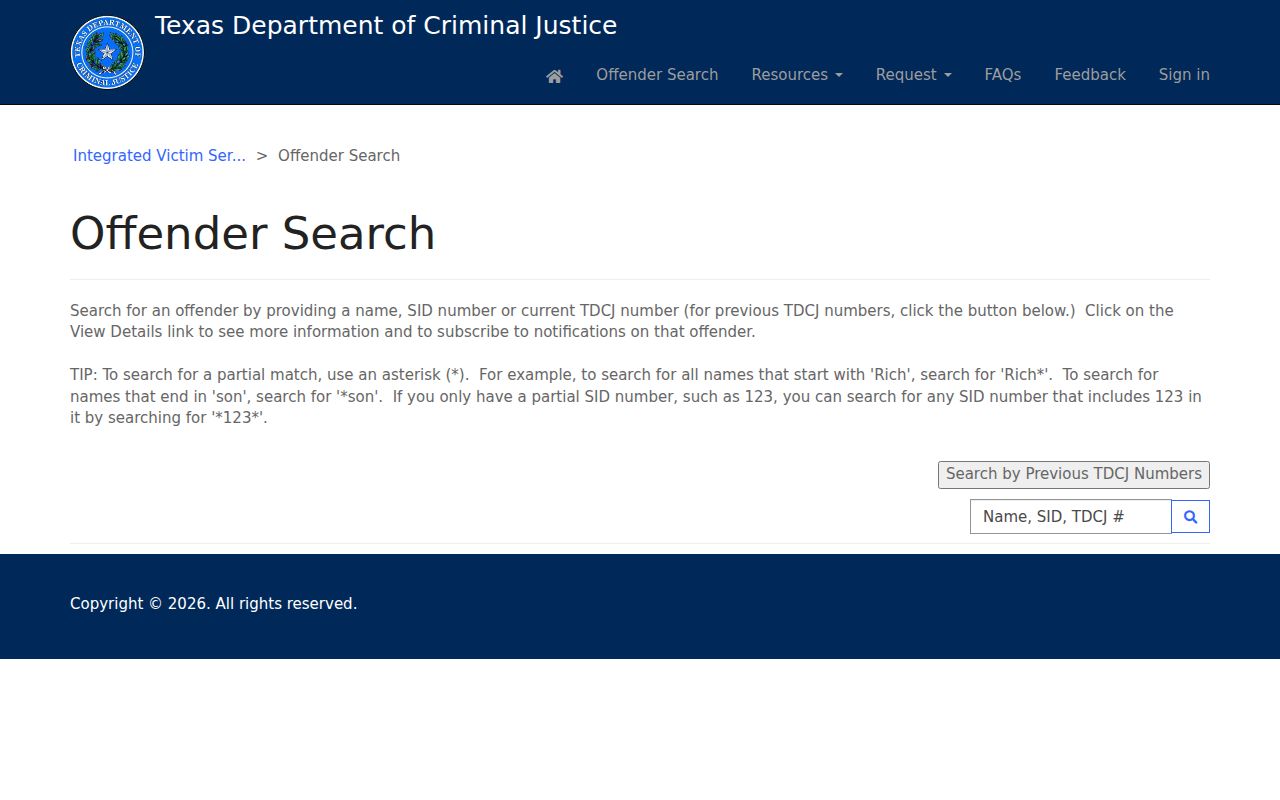
A locator can identify the correct custodian for a confined-person record, but it is not a general residence record or complete case history. It also carries its own use limits. The historic block trail needs the map, directory, parcel, or deed records that correspond to the dates being compared.
Note: A historic map shows the built environment at its publication date, not who owns or occupies a place today.
Laredo Official and Unofficial Search Paths
Official sources identify their custodian, date, search limits, and correction route. Unofficial people-finding services often merge old addresses, aliases, and relatives without showing how a match was made. A source with a visible record date and agency route is a better starting point, even when it requires a clerk request or reading-room visit.
| Question | Official path | Why it is stronger |
|---|---|---|
| Who owns this parcel? | Webb tax account and County Clerk instrument | Shows the source record and date |
| What court file is this? | Webb portal and relevant clerk | Custodian can provide the actual filing |
| Who was at this address years ago? | Directory volume, archive, and census | Preserves the publication or enumeration year |
Texas TAMES has a defined appellate field set: court, case number, partial case number, civil or criminal type, date range, style, attorney or bar number, and trial-court references.
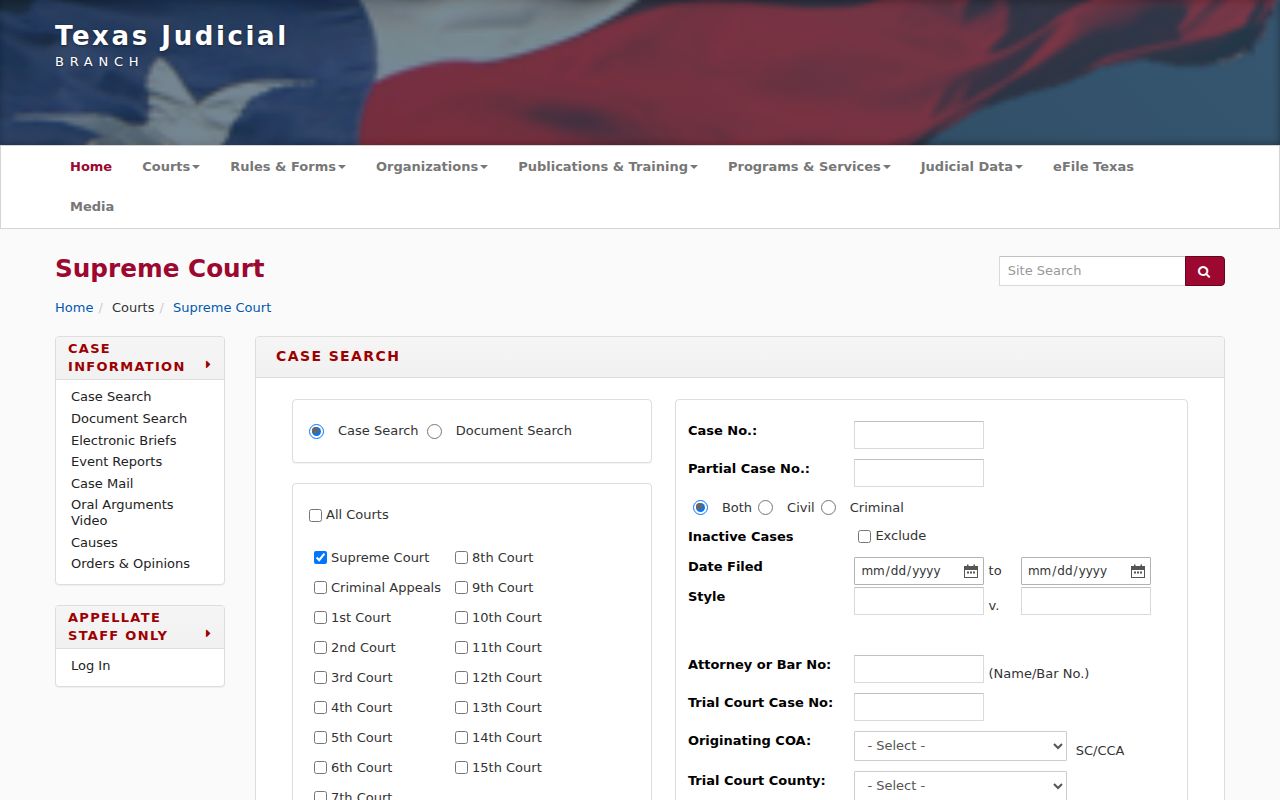
TAMES refreshes nightly and does not hold Webb trial-court records. Use the listed clerk when an appellate search points back to a local case.
Laredo Records Requests and Redaction
Texas Government Code Chapter 552, the Public Information Act, generally opens government-held information unless an exception applies. It is a law for requesting existing records, not a requirement that an office compile a custom dossier. The City of Laredo requires written open-records requests through its Open Records Center. Name the department, record category, date range, address or permit number, and desired format. For judicial records, write to the clerk with custody.
Webb County records-management work explains why a search may end at a counter. The County Clerk says its computer system holds Official Public Records information from 1982 to the present, while earlier original books and scanning work reach into the 1800s. That is a system and scanning statement, not a promise of complete online images. Ask the clerk about the specific series, date, and copy method.
Records change, fields can be redacted, and portal access can move. Preserve a source URL and retrieval date, then ask the custodian about an error, redaction, sealed file, or missing image.